


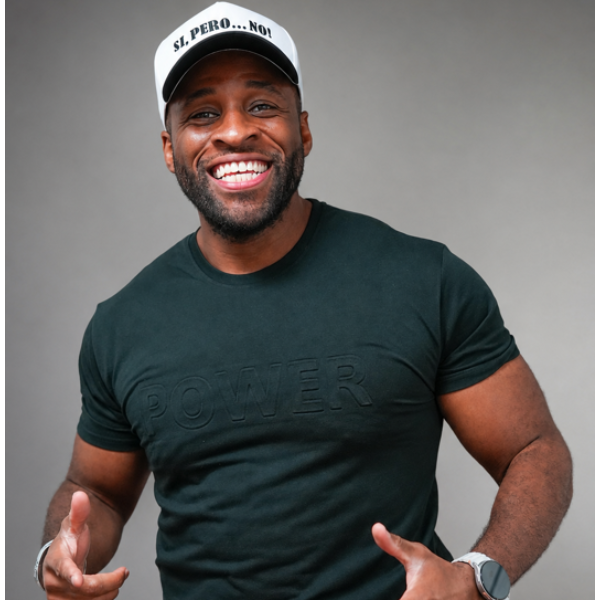
Before Chris Grant held the microphone, he knew what it felt like to be the joke.
The Bronx-born comedian was one of the biggest kids in his seventh-grade class, he recalled in a 2022 AWS interview, and his weight made him a target. One classmate was particularly relentless. Grant remembered the nickname: “Noodle Man.” He also remembered discovering that the room’s laughter could be moved. [1]
“When I realized that I could take control of laughter and direct it elsewhere, I knew that that was what I wanted to do for the rest of my life,” he told AWS. [1]
There is a career’s worth of intention in that sentence. Grant had found a way to change his position in the room. The kid being watched could become the person deciding where everyone looked next.
Now performing as Chris “Catman” Grant and posting as @officialchrisgrant, he brings that history to a career that runs through clubs, recordings, and the small screens where a joke finds its next audience. The Stress Factory in Bridgeport has him on the calendar for October 18, 2026, at 7 p.m. [2]
His route to the stage included an early lesson in what happens when entertainment misses the people it is meant to entertain. In his own booking biography, Grant recalls arriving at the College of Mount Saint Vincent in 2005 and attending its Trippin’ Tuesdays comedy events. He thought the acts could connect better with the students. He got involved in campus organizations, entered an amateur competition, and, by his account, kept winning. [4]
The complaint is as revealing as the wins. Grant was paying attention to the audience before he had much of one. Who was sitting there? What did they recognize? Why wasn’t the material landing? Being funny in the abstract was not enough. Somebody in that particular room had to laugh.
He would spend time in another demanding room as a middle-school science teacher, a background described in his comedy-club biography and his AWS interview. Anyone imagining a captive audience has forgotten middle school. Attention has to be earned, and the room supplies feedback whether you asked for it or not. [1] [3]
Grant named Martin Lawrence and Bernie Mac among his influences when he spoke to AWS. He was drawn to the way comedy could set a familiar view of life beside an unexpected one. Recognition gets an audience close; the turn catches it off guard. A story can begin somewhere everybody knows and still end where nobody saw it going. [1]
That interest in recognition gives readers a useful way into his work. Overhills Studio has released Eastville Comedy Club performance material featuring Grant, including a clip titled “Dominican Songs Are Sounds.” A 2026 appearance on The 950 Lounge Show offers another place to encounter the comedian beyond a passing social post. [5] [6]
The paths into comedy have multiplied since the campus contest: a club listing, a podcast episode, a clip sent by a friend. But a follower count cannot explain the choice that started this particular story. Grant wanted a say in where the laughter went.
The October 18 show gives the next audience a place to find him. The older classroom story supplies the stakes. For a kid who had been turned into somebody else’s punch line, making people laugh meant more than getting attention.
It meant getting the room back.

